Films for Secondary Beverage Packaging
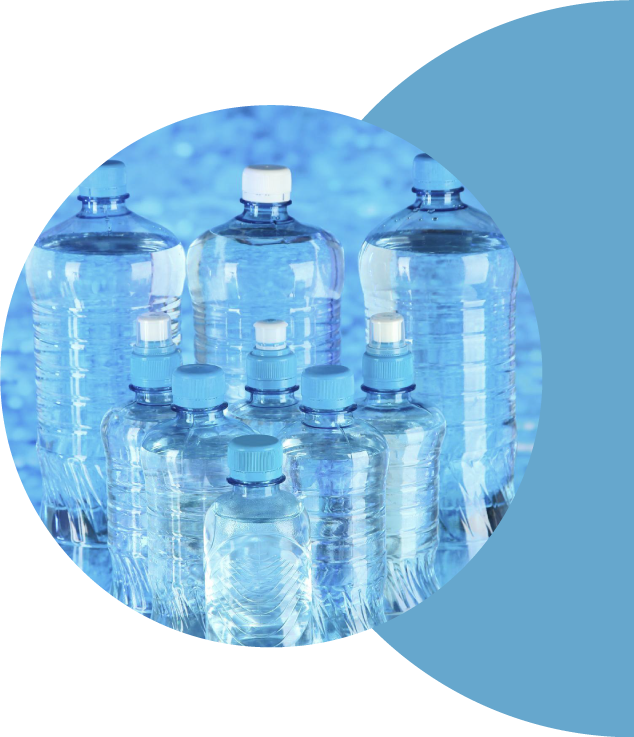
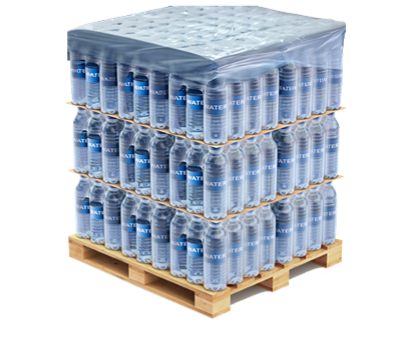
The beverage industry, including mineral water, soft drinks and beverages in general, requires secondary packaging solutions capable of ensuring mechanical strength and pack stability during transport, handling and storage, while also delivering excellent print quality to enhance brand visibility on the shelf.
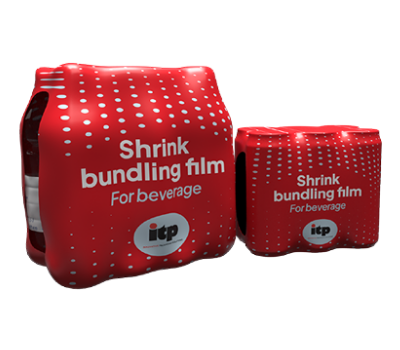
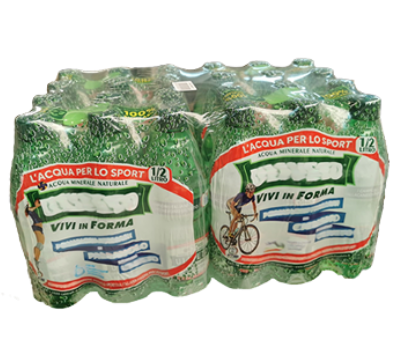
For this reason, we develop high-performance shrink films for bottle bundling, featuring structural stiffness specifically engineered to reduce the risk of pack breakage during handling operations, together with flexographic printing up to 10 colours for immediate brand recognition at the point of sale.
At the same time, we continue to invest in the development of mono-material films and solutions containing PCR content, supporting the industry’s transition towards increasingly sustainable packaging models that are compliant with PPWR requirements.


How is PCR content certified in beverage bundling films and what does the PPWR require?
In Italy, the reference certification is Plastica Seconda Vita (PSV), issued by IPPR. This certification verifies the quality and traceability of recycled content through third-party audits, in accordance with UNI UNIPLAST 10667, EN 15343 and UNI EN ISO 14021 standards.
Certification is becoming increasingly important in light of the Packaging and Packaging Waste Regulation (PPWR), which introduces mandatory recycled content targets for plastic packaging, ranging from 10-35% by 2030 and 25-65% by 2040, depending on the polymer type and application.
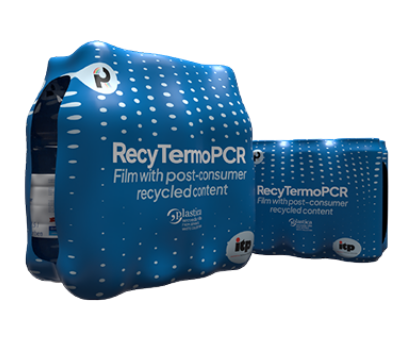
ITP has already obtained PSV certification for its RecyTermoPCR shrink film, containing 50% recycled content sourced entirely from post-consumer waste. The film provides the mechanical strength and shrink performance required for beverage bundling applications, making it a solution that is already positioned to anticipate future PPWR requirements.
How can melting between the bundle shrink film and the primary packaging be prevented?
The risk of melting can be managed by optimizing both the film formulation and the shrink tunnel parameters. The film is designed with a shrink temperature that is sufficiently below the softening point of the materials it comes into contact with, such as labels, overwraps and inks. This allows the film to shrink and seal properly without transferring excessive heat to the underlying pack.
From a process perspective, tunnel temperature, conveyor speed and dwell time must be carefully balanced, as excessively high temperatures or slow pack speeds can exceed the safety threshold even when the correct film is being used.
For more demanding applications, ITP develops low-shrink-temperature films, specifically designed and manufactured according to customer requirements to shrink at lower temperatures, further reducing the risk of melting the primary packaging.
ITP also supports customers during line start-up activities to identify the optimal combination of operating parameters. This is particularly valuable when changing bottle formats, label types or introducing recycled content into the film.
Why is shrink film preferred over stretch film for bundling water and beverage bottles?
Shrink film (such as Ultraterm) is loosely wrapped around the bundle and then shrunk in a heat tunnel, conforming to the shape of the bottles while providing excellent appearance and mechanical strength during handling and transportation.
Stretch film, on the other hand, adheres through mechanical tension during wrapping, without the use of heat. The film is stretched beyond its yield point, and its tendency to return to its original shape generates the containment force. No heat tunnel is required, but the resulting pack generally offers lower visual appeal and rigidity.
In summary, shrink film prioritizes pack stability and print quality, which is why it is the standard solution for beverage multipacks intended for retail display, whereas stretch film prioritizes operational efficiency and simpler equipment requirements, making it more commonly used for transport palletization.
View products catalog